
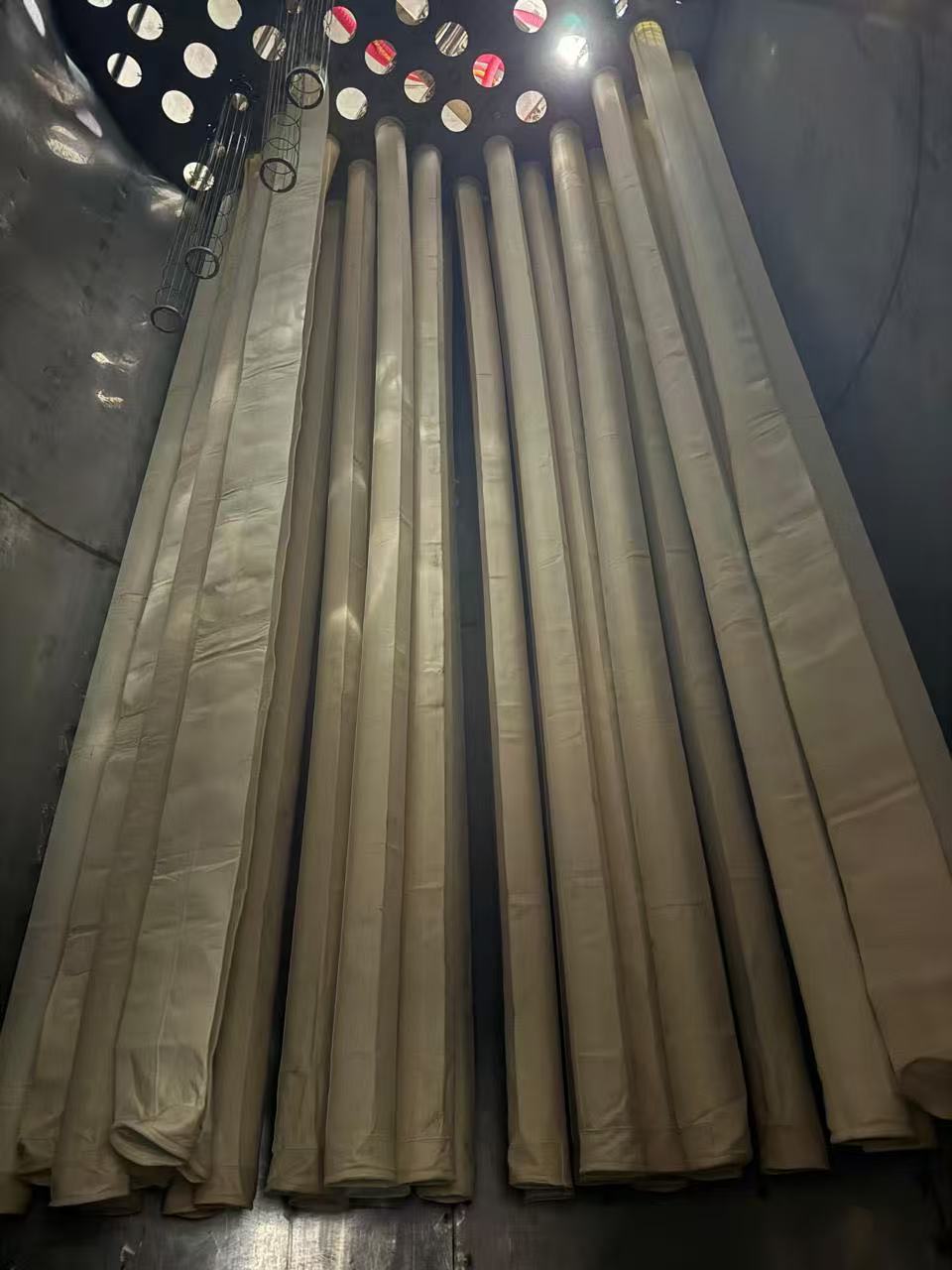
Every dust collection system is only as good as its consumable parts. The filter bag captures the dust; the cage keeps the bag standing under pressure. Together, dust collector filter bags and stainless steel bag cages determine filtration efficiency, energy consumption and how often you need to replace parts.
Whether you run a pulse jet baghouse, a reverse air collector or a shaker-type unit, this guide covers what filter bags and cages are made of, how they work together, how to size them correctly and how to make them last longer.
What Are Dust Collector Filter Bags?
Dust collector filter bags — also called baghouse filter bags, dust bags or filter socks — are cylindrical fabric filters installed inside a baghouse. Dirty air flows around the outside of the bag, the fabric traps dust particles, and clean air passes through into the clean-air plenum.
Each bag is attached to the tubesheet at the top and hangs down into the hopper area. A wire cage supports the bag from the inside so it keeps its round cross-section during operation and pulse cleaning.
Key Specifications to Compare
- Filtration area and bag dimensions (diameter × length)
- Fabric weight (g/m²)
- Air permeability (m³/m²/min)
- Continuous operating temperature
- Filtration efficiency and emission class
-
What Is a Stainless Steel Bag Cage?
A filter bag cage — also called a bag cage, bag skeleton or filter cage — is the internal support structure that keeps the filter bag open. It is built from vertical wires welded to horizontal rings, with a venturi at the top opening.
Without a cage, the bag would collapse under negative pressure and airflow, drastically reducing the effective filtration area and damaging the fabric.
How Filter Bags and Cages Work Together
In a pulse jet baghouse:
- Dust-laden air enters the hopper and flows upward around the bags.
- Dust collects on the outer surface of the filter bag; clean air passes through the fabric and the cage into the clean-air plenum.
- During cleaning, a solenoid valve releases a short burst of compressed air into the venturi. The venturi accelerates the pulse, creating a shock wave that travels down the bag and flexes the fabric, releasing the dust cake into the hopper.
- The cage holds the bag open so the fabric can flex freely without collapsing.
Matching the cage to the bag is therefore not optional — it is the difference between a filter that self-cleans reliably for years and one that blinds within weeks.

Leave a Comment